Botox vs. Dysport: What's the Difference?
Both Botox and Dysport are FDA-approved neuromodulators that relax wrinkle-causing muscles — but they're not identical. Here's how to know which one might be right for you.
Botox vs. Dysport: The Question We Hear Every Day
If you're considering neuromodulator treatment for the first time — or you've had Botox before and are curious about Dysport — you're not alone. "What's the difference between Botox and Dysport?" is one of the most common questions we get at Beautification Med Spa.
The short answer: they're both excellent, FDA-approved treatments that work the same way. The longer answer involves some meaningful differences in formulation, onset, spread, and dosing that can make one a better fit for certain patients or treatment areas.
Let's break it down.
How Both Treatments Work
Botox and Dysport are both botulinum toxin type A neuromodulators. When injected into a muscle, they temporarily block the nerve signals that cause that muscle to contract. Without the contraction, the overlying skin smooths out — and the wrinkle softens or disappears.
Both are FDA-approved for:
- Glabellar lines (the "11s" between the brows)
- Forehead lines
- Crow's feet
And both are commonly used off-label for brow lifting, lip lines, chin dimpling, neck bands, jaw slimming (masseter), and hyperhidrosis (excessive sweating).
Key Differences Between Botox and Dysport
1. Formulation and Molecular Size
Botox (onabotulinumtoxinA) and Dysport (abobotulinumtoxinA) are made by different manufacturers and have slightly different protein structures. Dysport's molecules are smaller, which affects how the product behaves once injected.
2. Spread
Dysport tends to diffuse more than Botox after injection. This can be an advantage in larger treatment areas — like the forehead — where broader coverage is desirable. In smaller, more precise areas (like around the lips or eyes), Botox's more contained spread is often preferred.
3. Onset
Dysport typically shows results faster — often within 2–3 days, compared to Botox's 4–7 days. If you have an event coming up and want to see results quickly, Dysport may have a slight edge.
4. Duration
Both products last approximately 3–4 months for most patients, though individual results vary. Some patients report that Dysport lasts slightly longer for them — but this is highly individual and not a universal finding.
5. Dosing
Botox and Dysport are not dosed the same way. Dysport units are not equivalent to Botox units — Dysport requires roughly 2.5–3 units for every 1 Botox unit to achieve a comparable effect. This is normal and expected; it doesn't mean one is "stronger" than the other.
Side-by-Side Comparison
| Botox | Dysport | |
|---|---|---|
| Active ingredient | OnabotulinumtoxinA | AbobotulinumtoxinA |
| Onset | 4–7 days | 2–3 days |
| Duration | 3–4 months | 3–4 months |
| Spread | More contained | Wider diffusion |
| Best for | Precise areas, first-timers | Large areas, faster results |
| Unit equivalence | 1 unit | ~2.5–3 units |
Which One Is Right for You?
Honestly? For most patients, both work beautifully — and the best choice often comes down to your provider's recommendation based on your anatomy, treatment area, and goals.
You might prefer Botox if:
- You're new to neuromodulators and want a well-established, predictable option
- You're treating a small, precise area (lip lines, under-eye area)
- You've had great results with Botox before
You might prefer Dysport if:
- You want to see results faster
- You're treating a larger area like the forehead
- You've tried Botox and felt it wore off quickly
- Your provider recommends it based on your muscle anatomy
What About Xeomin and Jeuveau?
There are two other FDA-approved neuromodulators — Xeomin and Jeuveau — that work similarly. At Beautification Med Spa, we currently offer Botox and Dysport, which together cover the full range of what most patients need. During your consultation, we'll discuss which product is the best fit for your goals.
What to Expect at Your Appointment
Whether you choose Botox or Dysport, the appointment experience is essentially the same:
- Consultation — we review your goals, assess your facial anatomy, and recommend a treatment plan
- Prep — the treatment area is cleansed; ice or topical numbing may be applied
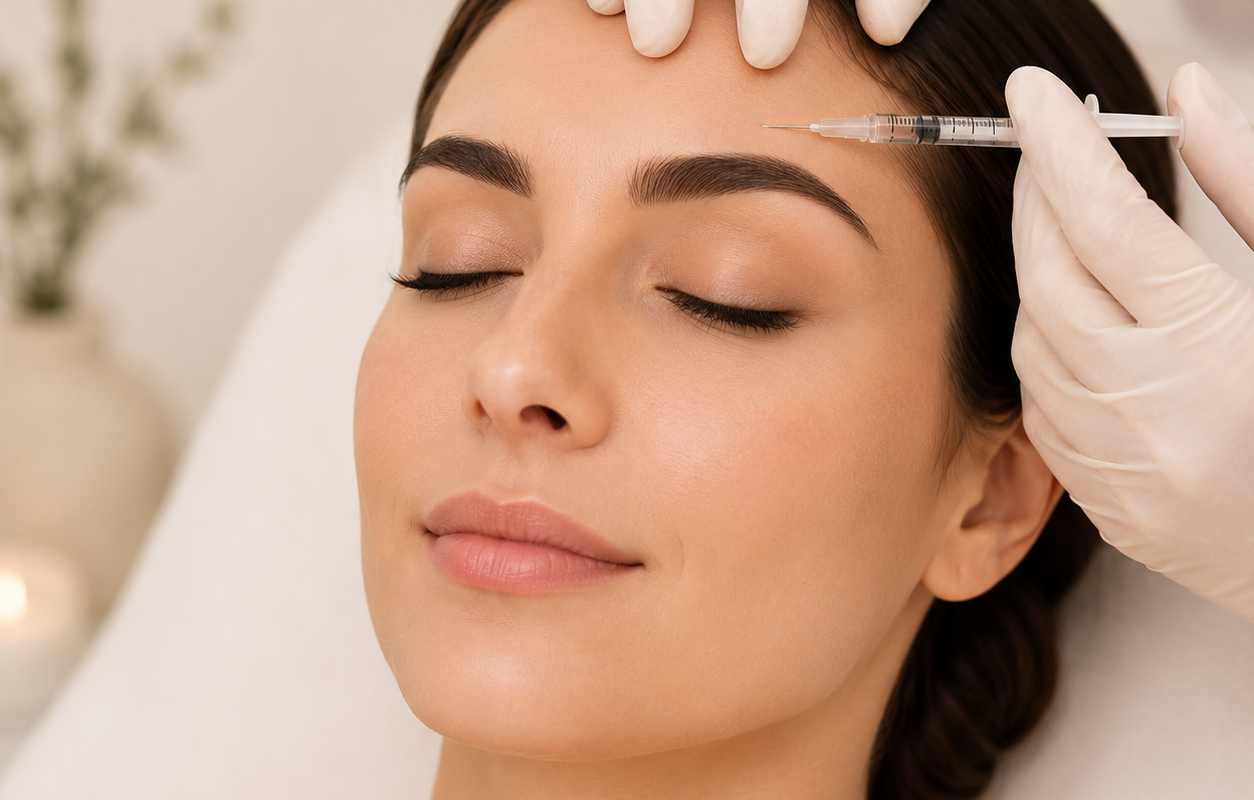
- Injections — tiny injections are placed with a fine needle; most patients describe a brief pinch
- Recovery — no downtime; avoid lying flat or exercising for 4 hours post-treatment
- Results — visible within 2–7 days; full effect at 2 weeks
Book Your Injectable Consultation in Concord, CA
Our injections are performed by Cynthia Silorio, NP — a co-founder of Beautification Med Spa with extensive experience in facial anatomy and aesthetic injections. We take a conservative, natural-looking approach: the goal is always to look refreshed, not frozen.
We serve patients from Concord, Walnut Creek, Pleasant Hill, Martinez, Clayton, Lafayette, Danville, and throughout the East Bay.
Learn more about our injectable treatments or book a consultation today.
This article is for informational purposes only and does not constitute medical advice. Results vary by individual.
Explore Topics
Written by
Cynthia Silorio, NP
Content creator and writer sharing insights and stories.